


Spark Mail: AI Email, Calendar
4.13.48K Reviews
App Specs
- Version
- 3.18.6
- Updated On
- License
- Free
- Downloads
- 1,000,000+
- Developer
- Spark Mail App
- Categories
- Productivity
- Platform
- Android
Screenshots
 Analysis by AppCompare
I treat an email app as a daily workbench, not just a place to read messages. That is why I look for more than a tidy inbox: I want to move between accounts without losing context, spot the messages that need a response, and keep appointments connected to the conversations that created them. Spark Mail: AI Email, Calendar is built around that kind of routine, and it makes the most sense when you use it to bring several parts of your day into one place.
It is a free productivity app from Spark Mail App, available to Everyone, with a 4.1 average from around 87,000 ratings and more than a million installs. The current version is 3.16.4, and the app has been available since April 1, 2019. Those figures suggest a well-established option, but the more useful question is whether its way of organizing mail fits how you actually work.
Making one inbox work for the whole day
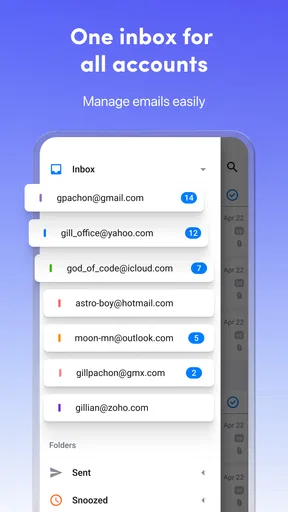
The app can bring Gmail, AOL, Yahoo, and Hotmail accounts together, which is useful if work, shopping, and personal messages are scattered across providers. I would start by connecting only the accounts I check regularly, then spend a few days noticing which messages I need to act on and which ones can wait. A unified view is convenient, but it is not automatically a better inbox if every account’s noise arrives at once.
In a typical morning, I might check a work thread, notice a delivery update, and find a meeting request in the same session. Spark’s appeal is that I can handle those different jobs without repeatedly jumping between mail apps. The calendar adds another practical layer: an appointment can be reviewed alongside the messages that explain it, rather than being treated as a separate chore.
First Impressions and a sensible setup
When I first downloaded Spark Mail: AI Email, Calendar, I was immediately impressed by its sleek and intuitive design. The interface is clean, modern, and, most importantly, user-friendly. Gone are the days of clunky and confusing email layouts. This app really nails it with simplicity and elegance.
Setting up was a breeze. I had all my email accounts (yes, I have more than one) synced up in no time. The app supports multiple email services, and the integration was seamless. It felt like it was reading my mind, knowing exactly what I needed, and when I needed it.
For a calmer first week, I would avoid trying to reorganize every account on day one. Add the accounts you depend on, check how their messages appear together, and then decide whether the combined view helps or makes important mail harder to notice. If you use different addresses for very different roles, keeping that distinction in mind is still part of the workflow; one app does not make every message equally relevant.
Worth Reading Before You Choose

EA SPORTS FC Mobile 26 Is a Bigger Football Game, but It Takes Time

Flipboard Shows What News Apps Must Do Beyond the Feed

Switching to Android Auto Means Rethinking Your Driving Routine

Google Calendar Makes a Crowded Week Easier to Manage

Ludo King Makes the Most of the Minutes Between Plans

Baby Panda World Brings Quick Play to Modern Phones, but Its Game Library Feels Busy
Smart Inbox: useful sorting, not a substitute for judgment
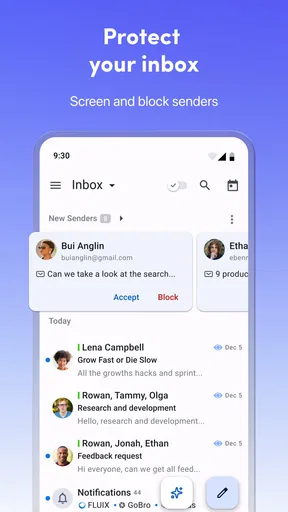
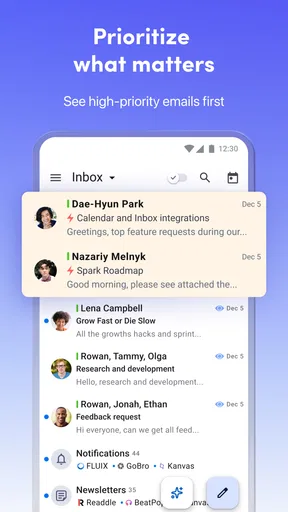
The Smart Inbox feature is where the magic happens. It automatically categorizes your emails into Personal, Notifications, and Newsletters. This means no more sifting through spam to find that important email from your boss. It’s like having a personal assistant who knows what you want to see first.
The AI aspect of the app is impressive, learning from your behaviors and improving over time. It’s a bit like having a mind-reading buddy that helps you sort through your digital chaos.
I would still treat those categories as a first pass rather than a guarantee. A receipt or account alert can matter even when it is not a message that calls for a reply, while a newsletter may occasionally contain something worth keeping. The practical habit is to scan the sections that match your current task instead of assuming that anything outside the first view can be ignored.
This is also where Spark differs from a basic provider inbox. The usual mail app may feel more familiar and keep the experience tightly tied to one account; Spark’s advantage is the chance to combine accounts and use a more deliberate sorting view. If you mostly use one address and already have a dependable system, changing apps may add little. If several inboxes compete for your attention, the consolidated approach has a clearer payoff.
Calendar links that help close the loop
Another standout feature is the calendar integration. It’s not just an afterthought, but a well-executed tool that syncs beautifully with your existing calendars. Scheduling emails and managing appointments has never been easier. I love how I can quickly glance at my day without having to switch between apps.
Plus, the ability to create events directly from an email is a small touch that goes a long way. It’s a perfect blend of productivity and convenience.
The useful habit here is to turn a scheduling conversation into a calendar action while the details are still in front of you. If someone proposes a time by email, creating an event from that message can reduce the chance of forgetting the commitment or having to search for the original thread later. I would still review the event details before relying on it: convenience is most valuable when it saves a step without encouraging a rushed tap.
For people whose workday is driven by meeting requests, this connection can make Spark a better fit than a mail-only alternative. For someone who plans everything in a separate calendar and rarely schedules from email, the integration may be pleasant but not a reason on its own to switch. The deciding factor is how often a message turns into a real appointment.
Settings and repeatable habits that save effort
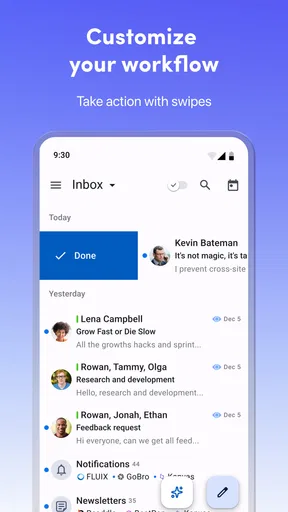
Let’s talk about customization. I’m a bit of a control freak when it comes to organizing my apps, and Spark Mail didn’t disappoint. From customizable swipes to personalized email signatures, it offers a level of personalization that feels tailored just for you.
Rather than changing every option at once, I would begin with the swipe actions. Choose actions that match the decisions you make most often, such as clearing a message you have handled or keeping a message that needs a later reply easy to find. The point is not to make the app look personalized; it is to reduce the number of small decisions you repeat throughout the day. If a gesture becomes hard to remember, a simpler setup is better than a clever one.
Signatures are worth checking when you send from more than one address. A message intended for a work contact should not accidentally carry a personal sign-off, and the reverse can feel just as awkward. Taking a moment to confirm which account you are replying from is a useful habit in any unified inbox, especially when several addresses share the same screen.
A repeatable routine can be more valuable than another setting: scan the inbox at a chosen time, act on messages that have a clear next step, and leave anything requiring concentration for a focused pass. Spark can make that routine easier to carry out, but it cannot decide which messages deserve your attention. That distinction matters for anyone expecting AI sorting to manage an inbox entirely on its own.
Collaboration, privacy, and where expectations matter
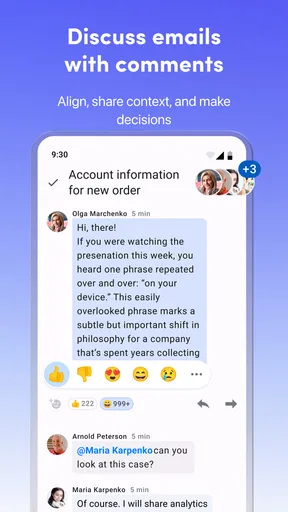
The app also allows for team collaboration, which is fantastic for those working in group settings. You can invite colleagues to discuss specific emails and threads without forwarding messages endlessly. It’s a true productivity booster.
That can be useful when a colleague needs to weigh in on a conversation but does not need a separate forwarded copy with missing context. I would use the discussion workflow for a specific question or decision, not as a replacement for every team conversation. If your workplace already has a clear process for sharing customer or internal messages, follow that process rather than assuming an email app’s collaboration tools should be used for sensitive material.
In today’s world, security is paramount. I was pleased to see that Spark Mail takes privacy seriously. With features like Touch ID and Face ID, I feel confident that my emails are secure. The developers emphasize their commitment to privacy, which is reassuring for those cautious about their data.
My practical advice is to think about the device and account habits around the app as well as the app itself: use the available device-level lock option if it suits your needs, and be careful about which accounts you add to a shared device. People with strict organizational rules about email access should check those requirements before moving work mail into a different client. That is a sensible limit for any third-party inbox, not a reason to assume that a convenient interface overrides workplace policy.
Who will get the most from Spark
I see the strongest fit for someone juggling several email addresses, handling a steady flow of newsletters and alerts, and turning messages into calendar commitments. A freelancer who separates client and personal mail, for example, may value seeing both in one place while retaining the ability to check the sending address and use an appropriate signature. Someone coordinating appointments by email can also benefit from having the calendar close at hand.
By contrast, I would hesitate to recommend it to a person who wants the exact familiar experience of a single provider’s app, rarely checks more than one inbox, or prefers to keep email and calendar completely separate. It may also be the wrong choice for people whose employer requires a particular mail client or whose routine depends on controls and workflows they already know well. Familiarity has real value when changing tools would add friction rather than remove it.
The app is free to download, with in-app purchases ranging from $4.99 to $199.99 per item. I would begin with the free experience and judge it by a concrete question: does bringing your accounts together help you handle messages with fewer interruptions? If you are considering a paid option, check what the offered purchase includes in the app and compare that with the features you will actually use; there is little point paying for capabilities that do not solve a problem in your routine.
Final Thoughts
After spending some quality time with Spark Mail: AI Email, Calendar, I can confidently say it’s a must-have for anyone drowning in their inbox. It’s more than just an email app; it’s a robust tool for managing your digital life with ease and efficiency.
If you’re tired of feeling overwhelmed by emails or just want a smarter way to stay organized, you should definitely give this app a try. It's available for both Android and iOS, and trust me, you’ll wonder how you ever managed without it.
So, what are you waiting for? Dive into the world of organized emails and seamless scheduling with Spark Mail. Your future self will thank you!
Pros
- AI-powered email sorting boosts productivity.
- User-friendly interface simplifies navigation.
- Seamless integration with multiple email accounts.
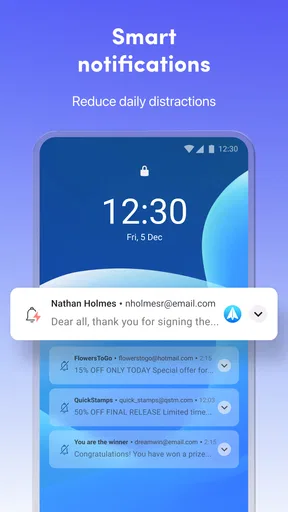
- Customizable notifications for personalized alerts.
- Efficient calendar management enhances scheduling.
Cons
- Limited offline functionality restricts access.
- Premium features locked behind a paywall.
- Occasional sync issues with certain providers.
- Some users report delays in email loading.
- AI suggestions can be hit or miss.
FAQs for Spark Mail: AI Email, Calendar
What features does Spark Mail offer to enhance email management?
Spark Mail provides a range of features designed to enhance your email management experience. These include a smart inbox that categorizes emails by priority, customizable swipes for efficient email handling, and powerful search capabilities. Additionally, Spark supports integrations with various third-party apps and offers collaborative features for team email management.
Is Spark Mail compatible with all email providers?
Yes, Spark Mail supports a wide array of email providers, including Gmail, Yahoo, Outlook, iCloud, and many others. This compatibility ensures that users can consolidate all their email accounts into a single, easy-to-use interface, streamlining communication across different platforms.
Does Spark Mail include calendar functionality?
Spark Mail integrates a built-in calendar feature that allows users to manage their schedules without leaving the app. You can create, edit, and delete events, as well as receive notifications for upcoming meetings or appointments, making it a convenient tool for both email and calendar management.
How does Spark Mail utilize AI to improve the user experience?
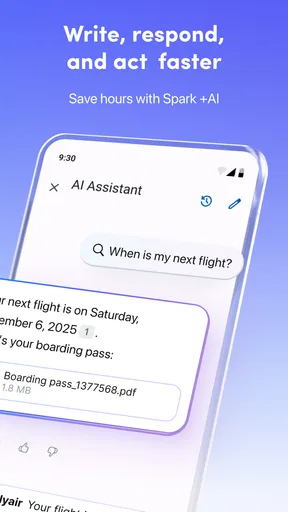
Spark Mail employs AI-driven features to enhance user experience by providing smart suggestions for email replies and prioritizing emails based on importance. The AI helps in decluttering the inbox by highlighting the most relevant messages, allowing users to focus on what truly matters without getting overwhelmed by email overload.
Is there a cost associated with using Spark Mail?
Spark Mail offers a free version with a robust set of features suitable for individual users. However, for teams and businesses looking for advanced collaboration tools and additional features, Spark offers premium plans. These plans include enhanced team functionalities and are available through a subscription.


